RSS Feed

Article Image Alt Text

Erath High recognizes its senior soccer players

Taking a group photo before playing on Tuesday were EHS senior soccer players (left to right): Cy-David LeBlanc, Landon Romero, Kalex Cornner, Evan Vaughn, Sean Herrington,, Annabel Etie, Carlos Arellano, Andrew Stutes, Coby-Jake Landry, Bennett Hargrave and Houng Phetsarath. (photo by Ragen Ashley Photography)

Article Image Alt Text

Signing a letter of intent were (left to right) Kevin Marix (Nunez Community College), Blaze Duhon (South Arkansas Community College) and Alex Landry (Gulf Coast State). The baseball coaches standing are Ralph Biondi, Seth Patin, Jarrod Duhon and head coach Jeremy Stephens.

Three North Vermilion Patriot baseball players sign with junior colleges

LEROY - Three baseball players from North Vermilion have officially signed letters of intent to continue their careers at the junior college level.
The signings include:
• Kevin Marix, who will be playing at Nunez Community College in Chalmette, Louisiana. They compete against teams like LSU-E, Delgado, and Baton Rouge Community College. Marix is an infielder and a right-handed pitcher for the Patriots.
• Blaze Duhon has signed with South Arkansas, based in El Dorado, Arkansas. Duhon plays first base and is a left-handed pitcher for NVHS.
• Alex Landry has committed to Gulf Coast State Community College in Panama City, Florida. Landry plays center field and is also a left-handed pitcher.

These three Patriots are set to uphold the legacy of North Vermilion baseball. As of 2026, there are six former Patriots playing college baseball and one in the Minor Leagues, although at the Class 3A level.

Article Image Alt Text

Gueydan Chamber of Commerce honored outgoing Krewe de La Chambre Royale King, Queen

On Jan. 4, the Gueydan Chamber of Commerce honored its 2025 Krewe de La Chambre Royale King Bobby Deperrodil and Queen Theresa Deperrodil Trahan at the Wine and Cheese. Nadine Lepretre, krewe captain and chamber president (with crown), takes part in the presentation. The Gueydan Chamber of Commerce Krewe de La Chambre Royale will host its annual Mardi Gras Ball on Jan. 31. Tickets are currently on sale for $50 and may be purchased at the Bank of Gueydan.

Article Image Alt Text

Delmer Lee Jordan

April 17, 1937 ~ January 12, 2026

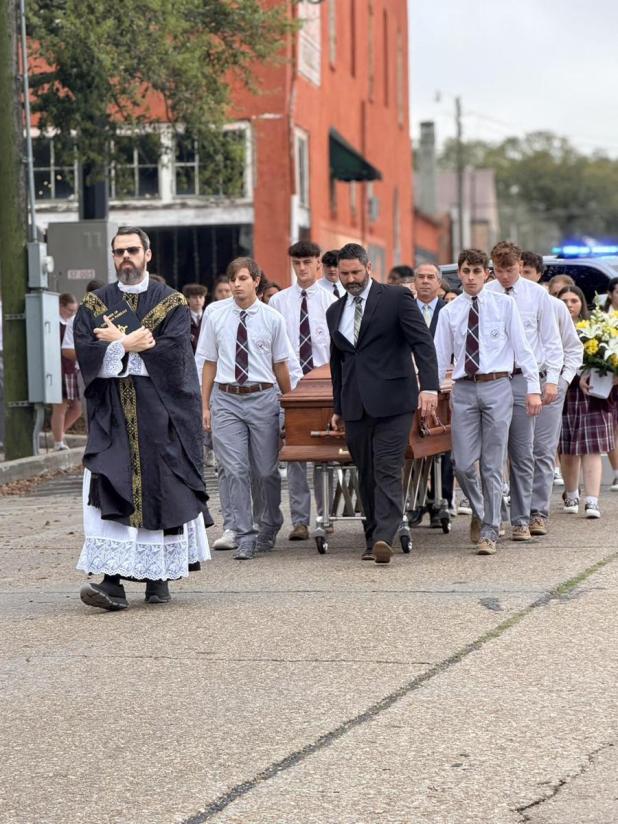
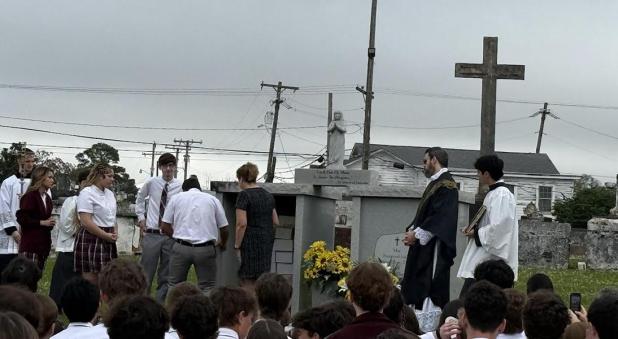
Funeral services officiated by Deacon William Vincent will be held at 11:30 a.m. Friday, January 16, 2026, at Vincent Funeral Home of Abbeville, honoring the life of Delmer Lee Jordan, 88, who passed away on January 12, 2026, at Our Lady of Lourdes Regional Medical Center. He will be laid to rest at St. Mary Magdalen Cemetery. Serving as pallbearers will be Seth Robinson, Colby LeBlanc, Garrett LeBlanc, Cade LeBlanc, Brock Jordan, and Cainnon Meche.
Delmer lived a life dedicated to service, as a dump truck driver and as a respected bus driver for the Vermilion Parish School Board, where he was known for his kindness and dedication. To this day, students who rode his bus loved to talk to Mr. Delmer when they saw him. He never met a stranger. His easy smile and kind heart allowed him to strike up a conversation with anyone, leaving each person he met feeling valued and at ease.
A visitation will take place at Vincent Funeral Home of Abbeville, 209 S. Saint Charles St., Abbeville, on Thursday, January 15, 2026, from 3:30 p.m. until 8:00 p.m. The visitation will continue on Friday, January 16, 2026, from 9:00 AM until the time of services.
He is survived by his devoted wife of 65 years, Rosa Nel B. Jordan; son, Ernie P. Jordan; two daughters, Janeen J. Trivanovich and her husband, David and Francine J. Veazey and her husband, Chad; grandchildren, Colby LeBlanc and his wife, Stacy, Cade LeBlanc, Brock Jordan, and Seth Robinson; great grandchildren, Kallie LeBlanc, Garrett LeBlanc, Cole LeBlanc, and Dani LeBlanc; one great-great grandchild, Railynn Meche; and sister, Lois J. Johnson
He was preceded in death by his parents, John Jordan and the former Odelia Young; daughter, Vanessa LeBlanc; in-laws Ernest and Una Broussard; and several siblings.
The family would like to extend a special thanks to Our Lady of Lourdes JD Moncus Cancer Center nurses and doctors.
All funeral arrangements are being conducted by Vincent Funeral Home - Abbeville (337) 893-4661.

Article Image Alt Text

Mattie H. “Mitzie” Rollow

March 2, 1938 – December 31, 2025

A celebration of life service will be held on Friday, January 30, 2026, at 11 am at Amana Christian Fellowship in Maurice, LA for Mattie H. Rollow, 87, who passed away peacefully on Wednesday, December 31, 2025, at her home in Sun City Center, FL. A luncheon will be held following the service at The Petroleum Club of Lafayette. She had resided in Lafayette, LA for many years before a recent move to Florida to live near her family.
She was born on March 2, 1938, in Abbeville, LA at the Palms Hospital and lived her young life in Mouton Cove with her seven siblings. Her parents owned a grocery store there. As the last of eight children, she spent most of her time with her two brothers, Andy and Louis, and her beloved caregiver, Bay. Her father called her Mitzie and all the family followed suit.
Mattie made a profession of faith in Jesus Christ as her Lord and Savior at eight years old. That faith was revived and grew stronger as she regularly attended a BSF class in Lafayette led by Kay Davidson. As she shared her faith, her family also came to stronger faith in Christ.
Mattie was formerly married to L J Broussard of Abbeville, LA and was the widow of Dean H. Berry of Lafayette, LA. She later met and married Thomas A. Rollow in 1976 and they had a joyous life together. In earlier years, they loved to travel. They took many trips to Israel, the Caribbean, Europe, ski trips to Vail, Colorado, and their vacation refuge for many years was on Captiva Island, FL. They felt very fortunate to have visited many of the places they wanted to experience, but really their favorite place was at home together.
For most of her adult life, she was a happy housewife. She was also a very competitive B league tennis player and enjoyed the company of the women’s team who played with her. Many will recall her great taste in clothing and that she was always stylishly dressed. She had a fun sense of humor and very dry wit, was a wonderful gardener and became a very good cook. She was an avid reader mostly of Christian books. When Tom was alive, they had their devotion and prayer time together each morning. She also was a committed prayer warrior and many people called on her over the years to pray with them. In the early evening, she enjoyed game shows such as “Wheel of Fortune” and “Jeopardy” which she and Susan faithfully watched here in Florida.
Mattie is survived by her eldest daughter, Sharon Kay Broussard Newsom, who everyone calls Kay, and her husband Michael of Sun City Center, FL; granddaughters Kellie N. Albert and Cassie M. Stoutenborough, and four great granddaughters; a grandson, Marcus A. Maldonado, and many nieces and nephews.
She is also survived by stepdaughter, Terry Lynn Rollow Dunavant and her husband Pete of El Paso, TX; stepdaughter-in- law, Paula Rollow of Fairfax Station, VA; grandchildren Thomas Dunavant and Aimee Lynn Dunavant and Stephanie Rollow and Thomas A. Rollow, III as well as three great grandchildren.
Mattie was preceded in death by her parents Evalina Mills Holmes and James Whitfield Holmes; her sisters Mary LeBlanc, Dolly Johnson, Julia Shaw and brothers “D.H.” Holmes, James Holmes, Louis Holmes and Wendell Holmes. It is easy to envision a sweet Holmes sister and brother reunion as most had made professions of faith in Jesus Christ as their Lord and Savior.
She was also preceded in death by her beloved daughter, Suzette Maria Broussard Maldonado, whom she was so looking forward to being reunited with in Heaven; and her stepson Thomas A. Rollow, Jr. Most of all, her heart longed to be reunited with her wonderful husband of 42 years, Tom, who passed away January 25, 2019.
Her final days were spent residing two minutes down the road from her daughter Kay’s home in a lovely condo overlooking a beautiful lake with her live in companion and caregiver, Susan Mire. They both enjoyed living here in Florida. The entire family would like to thank Susan for her very excellent care of Mattie. They enjoyed one another’s company and companionship with the Lord.
In lieu of floral tributes, please consider a donation in Mattie’s name to Samaritan’s Purse Ministry, P. O. Box 3000, Boone N.C. 28607.

Article Image Alt Text

Jeff Crouere

Trump should confront the Mexican drug problem next

Since the beginning of his second term, President Donald Trump has made tremendous progress in halting the flow of illegal drugs into our country. On the first day of his second term, President Trump signed an executive order that allowed criminal organizations and drug cartels, such as the Venezuelan gang “Tren de Aragua,” to be labeled as “foreign terrorist organizations.”
Also, as he started his second term, the President made it a priority to secure the southern border, which has saved countless American lives.
Under President Joe Biden, the open border led to illegal drugs flooding our nation. The results were horrific as the annual number of Americans killed by illegal drugs skyrocketed. It reached a peak of 114,000 drug overdose deaths in the 12-month period ending in September 2023.
Along with securing the border, President Trump authorized 35 military strikes against narco-terrorist boats in the Caribbean Sea and the Eastern Pacific Ocean. Since early September, these strikes have killed at least 115 drug cartel criminals. According to President Trump, for every narco-terrorist vessel destroyed, 25,000 American lives were saved.
Simultaneously, the Trump administration began building up military forces in the region. While F-35 fighter jets were deployed to Puerto Rico, “three guided-missile destroyers,” were sent to the waters off the Venezuelan coast.
Eventually, the naval force assembled in the Caribbean Sea would include “nearly a dozen Navy ships” and 12,000 troops, as well as the U.S.S. Gerald Ford, “the U.S. military’s most advanced aircraft carrier.”
On December 10, an oil tanker was seized off the coast of Venezuela that was carrying “2 million barrels of heavy crude” oil. U.S. Attorney General Pam Bondi said that the tanker was part of “an illicit oil shipping network supporting foreign terrorist organizations.”
In the weeks that followed, another tanker was seized, a blockade was instituted and a docking facility used for illegal drugs was destroyed. Discussions were also held with Venezuelan dictator Nicolos Maduro, encouraging him to leave office.
After giving Maduro numerous chances to resign peacefully, the President authorized a lightning military strike that was flawlessly executed. Early Saturday morning, Maduro and his wife, Cilia Flores, were extracted in an operation led by “Delta Force, the U.S. Army’s most elite counterterrorism and direct-action unit.”
Venezuela was a major supplier of cocaine into the United States; however, 70% of U.S. drug overdose deaths are due to fentanyl. These drugs are shipped across our southern border after being produced by Mexican drug cartels using chemicals supplied by China.
Sadly, these vicious drug cartels are extremely powerful and totally control Mexico. As President Trump noted in a Fox News interview, Mexican President Claudia Sheinbaum is “not running Mexico. The cartels are running Mexico.” The President said that Sheinbaum is “very frightened” of the cartels and has rebuffed his offer to destroy them.
Trump claimed that “Something’s going to have to be done with Mexico.” The President is correct; the Mexican drug cartels are a direct threat to the United States.
Instead of being grateful that Maduro, a dangerous narco-terrorist leader, was apprehended and will face justice, the Mexican government denounced the U.S. military operation in Venezuela.
In their statement, the Mexican government “strongly” condemned the “military actions carried out unilaterally in recent hours by armed forces of the United States of America.”
With the opposition of the Mexican government and Sheinbaum’s refusal to combat the drug cartels, once again, President Trump will be faced with a major decision. While the Mexican President is afraid of the drug cartels, President Trump and our military are not fearful.
Trump realizes that Mexico treats the United States horribly, allowing drugs and illegal immigrants to flood into our nation. If the President decides to act, the United States military has the capability to destroy every Mexican drug cartel. Successfully defeating these deadly cartels would be the biggest step forward in the history of our “war on drugs.”
Trump has been the first United States president to launch a serious “war on drugs” by directly engaging the suppliers with military force and removing a narco-terrorist at the forefront of the illicit shipments into our country. The results have been outstanding, but victory cannot be achieved until the Mexican drug cartels are eradicated.
Striking the Mexican drug cartels can be the latest move of the Trump administration to bring order to the Western Hemisphere. President Trump is updating the Monroe Doctrine for the current era. He said, “The Monroe Doctrine is a big deal, but we’ve superseded it by a lot.”
Under President Trump’s doctrine, the goal is to prevent “hostile actors, foreign-backed criminal networks, and destabilizing regimes from gaining footholds in the hemisphere.” Narco-terrorist organizations in our “neighborhood” should no longer feel comfortable trying to destabilize and destroy the United States. Henceforth, they must face consequences.
President Trump has already placed the outlaw regime of Columbia on notice. He has called the communist dictatorship of Cuba “a failing nation;” however, dealing with Mexico should be next on his agenda.

Jeff Crouere is a native New Orleanian and is a political columnist, the author of America’s Last Chance, and provides regular commentaries on the Jeff Crouere YouTube channel and at Crouere.net. For more information, email him at jcrouere@gmail.com

Article Image Alt Text

Jim Bradshaw

Acadian seigneur wanted his King Cake

January 6, the feast of the Epiphany, is the official end of the Christmas season, but that doesn’t mean we have to give up our festivities; it is also the beginning of Carnival, the season leading up to Mardi Gras. Even more importantly for those of us who are not overly worried about girth or diet, it is the official start of the King Cake season, when it is downright rude to refuse a slice — not that anyone I know would want to.
If there is any hesitation, we can tell ourselves that we have to eat it or people will call us a cheapskate who is afraid of having to buy the next cake. It’s all part of a long tradition that may have come to North America with our Acadian ancestors.
The first King Cakes were baked in France centuries ago as part of the celebration of the three wise men finding the infant Jesus twelve days after Christmas. At some point, bakers began hiding a bean or pea inside the cake, and the person who got it was declared royalty for the day.
Most histories say the tradition came to Louisiana with its first French settlers, who also brought the celebration of Mardi Gras, but Canadian scholar Carol Blasi says the ritual seems to have been observed in Acadie earlier than 1649, at least fifty years before the first “Louisiana” settlement at Mobile.
In that year, Charles de Menou d’Aulnay, lord of Port Royal, and his wife Jeanne Motin demanded that “on the eve of the Feast of Kings” their tenant Martin Chevery and his wife should present them with “a round cake made of a quarter of a bushel of the finest white wheat flour … and a half dozen eggs, a half pound of butter of the very freshest kind, in the edge of which cake they will place a black bean.” (“Land Tenure in Acadian Agricultural Settlements,” PhD dissertation, University of Maine, 2019, 100)
The King Cake got to Louisiana before the Acadians did, probably by way of Mobile, where some historians believe Mardi Gras was celebrated in the early 1700s. Nobody knows for sure just when Epiphany and Carnival and King Cakes all came together. Most of us are just happy that they did.
Our King Cakes are decorated in the traditional Mardi Gras colors — gold (for power), green (for faith), and purple (for justice). Traditionally, a small plastic baby symbolizing the infant Jesus is hidden in the cake. It’s supposed to bring luck to the person who finds it, but also the obligation to provide the next cake.
Donald Entringer Sr., a Metairie baker, is usually credited with substituting a baby for the traditional bean. In the 1940s. according to most accounts, he was asked by a Carnival krewe to hide prizes in some King Cakes. He added the tiny babies to his batter and a tradition was born.
Some sources say the tradition began earlier than that, but it couldn’t have been much earlier because tiny plastic babies weren’t widely available until after World War II.
According to the Guinness Book of World Records, Haydel’s Bakery in New Orleans created the world’s largest King Cake in 2010. It took 28 full-time employees to make two cakes huge enough to go around the Superdome.
Both rings of the cakes were record-breaking: One weighed 4,073 pounds, shattering the old record held by a Houston bakery; the other ring weighed 4,068 pounds. Guinness didn’t say how the cakes were weighed or who did it, but it surely was an unwieldy (if not imprecise) process. Guiness is also silent on whether there was baby in the cake, but I know a few folks who might have kept eating until they found out.
There probably wasn’t one. Where are you going to find a plastic baby big enough for a two-ton cake? Besides, a lot of bakers nowadays just send a baby alongside the cake, not baked into it. Their lawyers or OSHA or some authority worried that somebody might choke on one that is hidden.
That’s fine with me, for the same reason some people favor Martinis without olives. Why would you want to take up room with a plastic bauble when it could be filled with the good stuff?
You can contact Jim Bradshaw at jimbradshaw4321@gmail.com or P.O. Box 1121, Washington LA 70589.

Article Image Alt Text

Jim Bradshaw

When steamboats and horses carried the mail

I was looking for something else when I came across a listing of every post office in the United States at the beginning of 1851. It points up the fact that most of south Louisiana was still sparsely settled just fifteen years before the Civil War, and that it was no easy task for mail or people to get across swamps, marshes, and prairies in those days.
There were fewer than twenty post offices listed in south Louisiana west of the Atchafalaya River, and only two of those, Lake Charles and Ballew’s Ferry (near Vinton on the Sabine River), were west of the Mermentau. It would be thirty years before a railroad spanned the prairies and began to fill with towns that needed post offices.
The places listed in the “Table of Post Offices in the United States on the First Day of January 1851” (W. & J.C. Greer Printers, Washington, D.C.), almost all sprang up on waterways of one size or another. In addition to Lake Charles and Ballew’s Ferry, they include Abbeville, Alligator (St. Mary Parish), Bayou Chicot, Bayou Ramos (St. Mary). Breaux’s Bridge, Fausse Pointe (probably Loreauville today), Franklin, New Iberia, Opelousas, Pattersonville (now Patterson), Perry’s Bridge (now Perry), Plaquemine Brulee, St. Martinsville [sic], Vermilionville (now Lafayette), Ville Platte, and Washington.
Mail from the outside world usually traveled first to New Orleans and from there was sent by various means into the interior. Newspaper publisher Daniel Dennett, who was also postmaster in Franklin, described a typical journey in 1876 in his book “Louisiana As It Is” (Eureka Press, New Orleans). The trip then was probably not much different than it would have been when the 1851 list was compiled.
The Morgan Louisiana and Texas Railroad had been operating from Algiers (across the Mississippi from New Orleans) to Brashear City (Morgan City today) since 1857, but travelers and mail bags still had to find other means of transportation from there.
According to Dennett, “The steamers of the Attakapas Mail Transportation Company leave Brashear City daily, for New Iberia, a distance of 72 miles, halting at Pattersonville, Centreville, Franklin, Charenton, and Jeanerette, and at intermediate landings. They usually extend their trips to St. Martinsville three times a week, 102 miles from Brashear.”
The mail might also be sent into the interior aboard “half a dozen or more small jobbing boats” that travelled to “Vermilion River, Grand Cote, Cote Blanche, Belle Isle, and the mouth of Bayou Sale.” These smaller boats carried the mail only when it was convenient’ They were mostly involved with “a large business towing rafts of cypress logs for the saw mills … and in bringing pieux [split cypress timbers] and other split lumber … to the planters on the Teche.”
Going north, mail coaches left New Iberia three times a week for Vermilionville, Grand Coteau, Opelousas, and Washington.
Another mail coach ran “regularly” between New Iberia and Abbeville, and “a horseback mail” went to “all the postoffices [sic] off the main traveled routes.”
“Regularly” might not have been as regular as one might expect. Newspapers throughout south Louisiana often railed about long intervals when no mail arrived from New Orleans. It could sometimes be weeks between deliveries.
Part of the problem was that there wasn’t a whole lot of profit in carrying the mail. Typically, a letter could be sent from anywhere in the United States to a settlement out on the prairie for a penny or less — and that penny had to be split between the railroad operator, the steamboat captain, and the guy riding horseback “off the main travelled routes.”
Of course, that was when a penny was still worth more than the metal it was made from, but not that much more.
You can contact Jim Bradshaw at jimbradshaw4321@gmail.com or P.O. Box 1121, Washington LA 70589.

Article Image Alt Text

Jim Brown

New Year thoughts from the Bayou State!

Do you make New Year’s resolutions? I always do. A New Year always brings with it promise and uncertainty, but this coming year brings with it a greater foreboding than we have experienced in the past. The Chinese have a saying: “May you live in interesting times.” But their definition means dangerous or turbulent. We in Louisiana and throughout America certainly live in “interesting” times today.
One resolution I make each year is to maintain my curiosity. It doesn’t matter how limited your perspective or how narrow the scope of your surroundings, there is (or should be) something to whet your interest and strike your fancy. I discovered early on that there are two kinds of people — those who are curious about the world around them, and those whose shallow attentions are generally limited to those things that pertain to their own personal well-being. I just hope all those I care about fall into the former category.
Another resolution is to continue to hope. I hope for successful and fulfilling endeavors for my children, happiness and contentment for family and friends, and for the fortitude to handle both the highs and lows of daily living with dignity.
I also ask friends and family to re-read Night, the unforgettable holocaust novel by Elie Wiesel, the Nobel Peace laureate who survived the Nazi death camps. I met him shortly before his death. I have a Wiesel quote framed on my office desk:
“To defeat injustice and misfortune, if only for one instant, for a single victim, is to invent a new reason to hope.”
Like many of you, our family welcomes in the New Year with “Auld Lang Syne.” It’s an old Scotch tune, with words passed down orally, and recorded by my favorite historical poet, Robert Burns, back in the 1700s. (I’m Scottish, so there’s a bond here.) “Auld Lang Syne,” literally means “old long ago,” or simply, “the good old days.” Did you know this song is sung at the stroke of midnight in almost every English-speaking country in the world to bring in the New Year?
I can look back over many years of memorable New Year’s Eve celebrations. In recent years, my wife and I have joined a gathering of family and friends in New Orleans at a French Quarter restaurant. After dinner, we make a stop at St. Louis Cathedral for a blessing of the New Year. Then it’s off to join the masses for the New Year’s countdown to midnight in Jackson Square.
When my daughters were quite young, we spent a number of New Year holidays at a family camp on Davis Island, in the middle of the Mississippi River some 30 miles below Vicksburg. On several occasions, the only people there were my family and Bishop Charles P. Greco, who was the Catholic Bishop for central and north Louisiana. Bishop Greco had baptized all three of my daughters, and had been a family friend for years.
On many a cold and rainy morning, the handful of us at the camp would rise before dawn for the Bishop to conduct a New Year’s Mass. After the service, most of the family went back to bed. I would crank up my old jeep and take the Bishop out in the worst weather with hopes of putting him on a stand where a large buck would pass. No matter what the weather, he would stay all morning with his shotgun and thermos of coffee. He rarely got a deer, but oh how he loved to be there in the woods. Now, I’m not a Catholic, but he treated me as one of his own.
New Year’s Day means lots of football, but I also put on my chef’s apron. I’m well regarded in the kitchen around my household, if I do say so myself, for cooking up black-eyed peas as well as cabbage and cornbread. And don’t bet I won’t find the dime in the peas. After all, I’m going to put it there.
I’ll be back next week with my customary views that are cantankerous, opinionated, inflammatory, slanted, and always full of vim and vigor. Sometimes, to a few, even a bit fun to read. In the meantime, Happy New Year to you, your friends and all of your family. See you next year.

Peace and Justice
Jim Brown

Jim Brown’s syndicated column appears each week in numerous newspapers throughout the nation and on websites worldwide. You can read all his past columns and see continuing updates at http://www.jimbrownusa.com.

Article Image Alt Text

Members of the Vermilion Foundation present a donation check to representatives of the Christian Service Center.

Article Image Alt Text

Members of the Vermilion Foundation present a donation check to representatives of LSU Eunice to go toward parish students.

Article Image Alt Text

Members of the Vermilion Foundation present a donation check for the Gifting Grace Project.

Article Image Alt Text

Members of the Vermilion Foundation present a donation check for the Community Wellness, Inc.

Article Image Alt Text

Members of the Vermilion Foundation present a donation check to representatives of Behold Catholic Ministries.

Article Image Alt Text

Members of the Vermilion Foundation present a donation check to representatives of the Boys & Girls Club of Acadiana.

Vermilion Foundation presents checks to nonprofit projects

The Vermilion Foundation, an affiliate of Community Foundation of Acadiana (CFA), is proud to announce $42,800 in grants to ten Vermilion Parish nonprofit projects.
The grants were commemorated during a check presentation ceremony held on Dec. 17 in Abbeville. Foundation members attending were Richard Broussard, Gene Sellers, Arlene Collee, and Earl “Boo” Landry. Not present were board members Kevin Sagrera, Karen Hoyt, Annie Caillouet, Dr. Jack Gupta, Becky Sirmon Joy, Pat Patout, Odile Segrest, Charles Sonnier and Carl Turnley.
These competitive grants are part of CFA’s ongoing commitment to engaged philanthropy, connecting donors to community-based projects that enhance the quality of life across the region.
“We are incredibly excited to deploy competitive grants like these for the first time in CFA’s history,” said Missy Bienvenu Andrade, President & CEO of Community Foundation of Acadiana. “This marks a significant milestone in using unrestricted funds while empowering our local communities to address their unique challenges and quality of life opportunities. We are so grateful to the many generous donors who have made these grants possible. Our gratitude also goes out to the dedicated chairs and board members of all five Affiliate Foundations, it’s through their leadership and commitment that this impact is possible.”
Awards of up to $5,000 were made, reflecting each affiliate’s commitment to supporting local solutions by 501c3 organizations. Each affiliate’s competitive process involves due diligence by staff and review of grant proposals by affiliate board members.

Grants from the Vermilion Foundation, A Fund of CFA

Behold Catholic Ministries’ Hopeful Hearts - Life After Loss Initiative
Boys and Girls Clubs of Acadiana’s Next Level Youth Development Program
Christian Services Center’s Utility Assistance Program
Community Wellness Inc’s Community Wellness Program
Creative Arts Momentum’s Community Works of Louisiana Initiative
Faith House’s Vermilion Parish Office
Gifting Grace Project’s Pack the Backpack Initiative
LSU Eunice’s STEAM Improvements Project
Operation Warm’s New Shoes for Vermilion Parish School Students
Professionals of LAGCOE’s Little Energizers Program

The Affiliate Grants Program is made possible by charitable funds established by individuals, families, and businesses who have contributed gifts to CFA and believe in creating lasting local change. These funds have created the Evangeline Affiliate Foundation, the Iberia Affiliate Foundation, the St. Mary Affiliate Foundation, the St. Landry Affiliate Foundation, and the Vermilion Affiliate Foundation.
The next Affiliate Grants Program cycle is slated to open in spring of 2026. Learn more about CFA’s Affiliate Grants Program at cfacadiana.org/affiliate-grants.
Community members who wish to support future grant cycles and strengthen local philanthropy can make a donation to an Affiliate Foundation at cfacadiana.org/funds-and-impact/affiliate-foundations or the Acadiana Fund.

About the Community Foundation of Acadiana

CFA is one of south Louisiana’s premier philanthropic organizations benefiting our region, with a focus on the parishes of Acadia, Evangeline, Iberia, Lafayette, St. Landry, St. Mary, St. Martin and Vermilion. CFA’s core purpose is to build legacies and improve communities by connecting generous people to the causes they care about. Since its inception in 2000, CFA has realized cumulative gifts exceeding $406 million and has made cumulative grants of more than $235 million. You can learn more at www.cfacadiana.org.

Pages

Vermilion Today

Abbeville Meridional

318 N. Main St.
Abbeville, LA 70510
Phone: 337-893-4223
Fax: 337-898-9022

The Kaplan Herald

219 North Cushing Avenue
Kaplan, LA 70548