
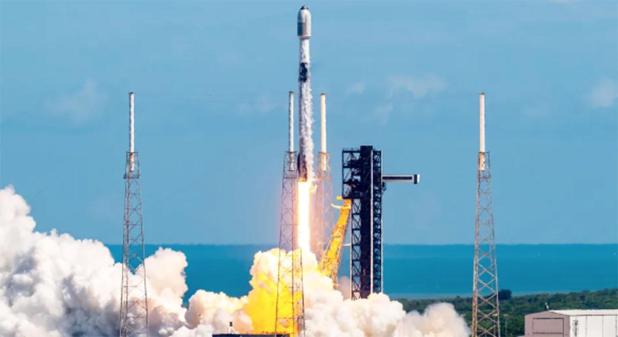
Residents near Pecan Island fear their homes will be be destroyed when and if rockets lift off near the Gulf of Mexico.
Residents in Pecan Island area worried their voice not being heard dealing with SpaceX
Rumors alone have stirred unease in Vermilion Parish, where locals are already anxious about what the future might bring to their corner of South Louisiana.
For months, and some say even years, speculation has swirled about a space exploration company eyeing the Gulf of Mexico, just a stone’s throw south of Pecan Island.
Reports suggest Louisiana may strike a deal with SpaceX for 130,000 acres of marshland, once belonging to ExxonMobil, with rumors swirling about leasing part of it for rocket launches near the Freshwater City locks and Mulberry Island, just south of Pecan Island.
Even with the proposed launch site set miles from homes and camps, Vermilion Parish residents worry about what could happen if Elon Musk’s multi-million-dollar facility lands in their marshes.
Community groups are forming to spotlight the risks a space company could bring to Pecan Island’s landscape, seafood, and wildlife. Yet when locals seek answers from state officials, they hit walls, leaving them wondering who or what is truly coming to South Vermilion Parish.
This debate goes beyond liking or disliking SpaceX. It’s about recognizing how power operates. When money, politics, and policy converge, generations who built their lives here often discover too late that their future was decided without them.
Joshua Blake from Kaplan posted on Facebook: “People here don’t just see marsh. They see memories. Hunting camps. Fishing holes. Family land. Generations of identity tied to a coastline that’s already disappearing. History has a way of dressing profit up as progress. If something sounds too good to be true, it usually is. The people making the biggest promises are rarely the ones who’ll live with the consequences. If the price is right, sell the land, take the money, and build a new life somewhere that still feels like home. Just don’t let anyone convince you that what was lost can ever be replaced. Some things aren’t measured in dollars. And once they’re gone, they’re gone.
“If SpaceX sets up shop in the parish, the promise is thousands of construction jobs and at least 3,000 permanent positions to run the facility.
“Maybe it’ll bring jobs. That’s the promise every billion-dollar project makes. The better question is: jobs for whom? Will they go to the families who’ve called this place home for generations, or to the specialized workforce brought in long after the land has changed hands?” Blake said.
“By the time most people realize the rules have changed, the game is already over. The only thing left is deciding what you’re willing to lose and what you’re determined never to forget.”
There are reasons why citizens worry about the lengths state and federal officials are going through to lure a company like SpaceX to Louisiana. The state recently created laws exempting SpaceX from lawsuits that could arise from launches, covering any vibrations, noise, odor, smoke, and “temporary access restrictions” — echoing the complaints raised by some locals around SpaceX’s Boca Chica, Texa development.
At the end of July, the federal government proposed waiving 13 requirements under the National Environmental Policy Act, the Endangered Species Act, and portions of the Clean Water Act and Clean Air Act for commercial space licenses and rocket launches and reentries. The proposal would make it easier for private space companies to get approval to launch rockets by avoiding “unnecessary” regulations, the FAA said.
For a month, the federal government is accepting public comments on Regulations.gov about eliminating 13 laws for commercial licenses and permits to operate a launch site. The comment section ends on Aug. 31.
Here are two comments have already been posted on the government website:
“This waiver is impacting a treasured part of Louisiana‘s “sportman’s paradise.” Pecan Island, Louisiana, is a rural and prized area famous for its duck hunting and coastal fishing. It attracts many, many birding enthusiasts as well. The commercial fishing here is invaluable to local families. Therefore, the waiver of environmental impact studies and the Endangered Species Act would be a travesty. Local people deserve a clean and safe environment, and events at SpaceX facilities in Texas have already proven that these types of facilities truly do represent a threat to both people, possessions, and wildlife.”
“These 13 regulations offer local people and all of us who value the abundance of healthy coastal ecosystems a chance to trust that the federal government is looking out for their health and safety, and not prioritizing a corporation or industry over the public and a healthy environment.”
A comment posted on social media said:
“Let’s be clear: I’m not against economic development. I’m against irresponsible business practices.
“Waiving the Clean Air Act, Clean Water Act, and the Endangered Species Act (among other long-held protections) to attract a large, wealthy corporation to do business in your state is about the most backward thing I ever heard of. Why would you want to attract business that doesn’t protect your water, air, and animals? Hell, they’ve got the money to protect it, right?
“Removing liability for a corporation’s responsibilities to its neighbors? So that if my family on Pecan Island can’t sleep from noise or their home’s foundation crumbles due to intense ground vibrations, they don’t have the right to take action?
“I see a lot of people around here who’d sell their soul for a got dang brand new pickup truck. And for what? Rockets? Gimme a break. Have some respect for your ancestors, and the land they tended all those years with blood and sweat. Have some respect for the land that holds you, feeds you, still after all it’s been through.
“And most of all, today — RESPECT PECAN ISLAND. She’s been through enough.”
In a recent story posted by POLITICO, an online newspaper, environmental law experts have asked: What would it mean for a space project to move forward there without the standard regulatory oversight?
“The presumption is launching rockets fast and often without much accountability, if any,” said Mark Davis, an environmental law professor at Tulane University, in a story written by POLITICO, an online newspaper. “We’re not just preferencing rocket launches over the environment. We’re preferencing private space facilities over other property owners, other resources, without any real discussion.”
The FAA proposal would allow Transportation Secretary Sean Duffy to relinquish requirements under 13 environmental laws for launch and reentry actions, FAA licenses, and federal environmental permits. It would also apply to “experimental” FAA permits for rockets used for testing and training, POLITICO wrote.
Perhaps most relevant to coastal Louisiana, companies could get exemptions from the section of the Clean Water Act that prohibits filling of wetlands without a permit.
Brooke Broussard, whose family has lived on Pecan Island in one way or another for several generations, has been making attempts to educate the community about what this development could mean for the people living there.
She stated she’s hearing from other community members that people in power are “paving the way to make it happen so quickly it will leave our heads spinning.”
Broussard expressed concern that there hasn’t been an environmental impact study for this development's effects on the environment and inhabitants of the proposed site.
“They are throwing out the rulebook to make my home a desolate wasteland for what? Rockets?” said Broussard, a veteran public schoolteacher in Vermilion Parish.
“I’m concerned about the already fragile hydrology of Pecan Island and its wetlands, and the quality of life for residents who live there despite the hardships. These are people who want peace, not crowds and traffic. This would set a precedent to allow dirty business without any sort of accountability.”